
Drone LiDAR Surveying & Mapping Services in NZ
Recon provides high-accuracy drone LiDAR surveying services across Auckland and throughout New Zealand, combining cutting-edge UAV technology with over two decades of specialist expertise.
Our Part 102-certified operators deliver survey-grade point clouds, DTMs, and 3D mapping solutions across the country's most challenging terrain. Contact us for LiDAR drone mapping services in NZ today.
What is Drone LiDAR?
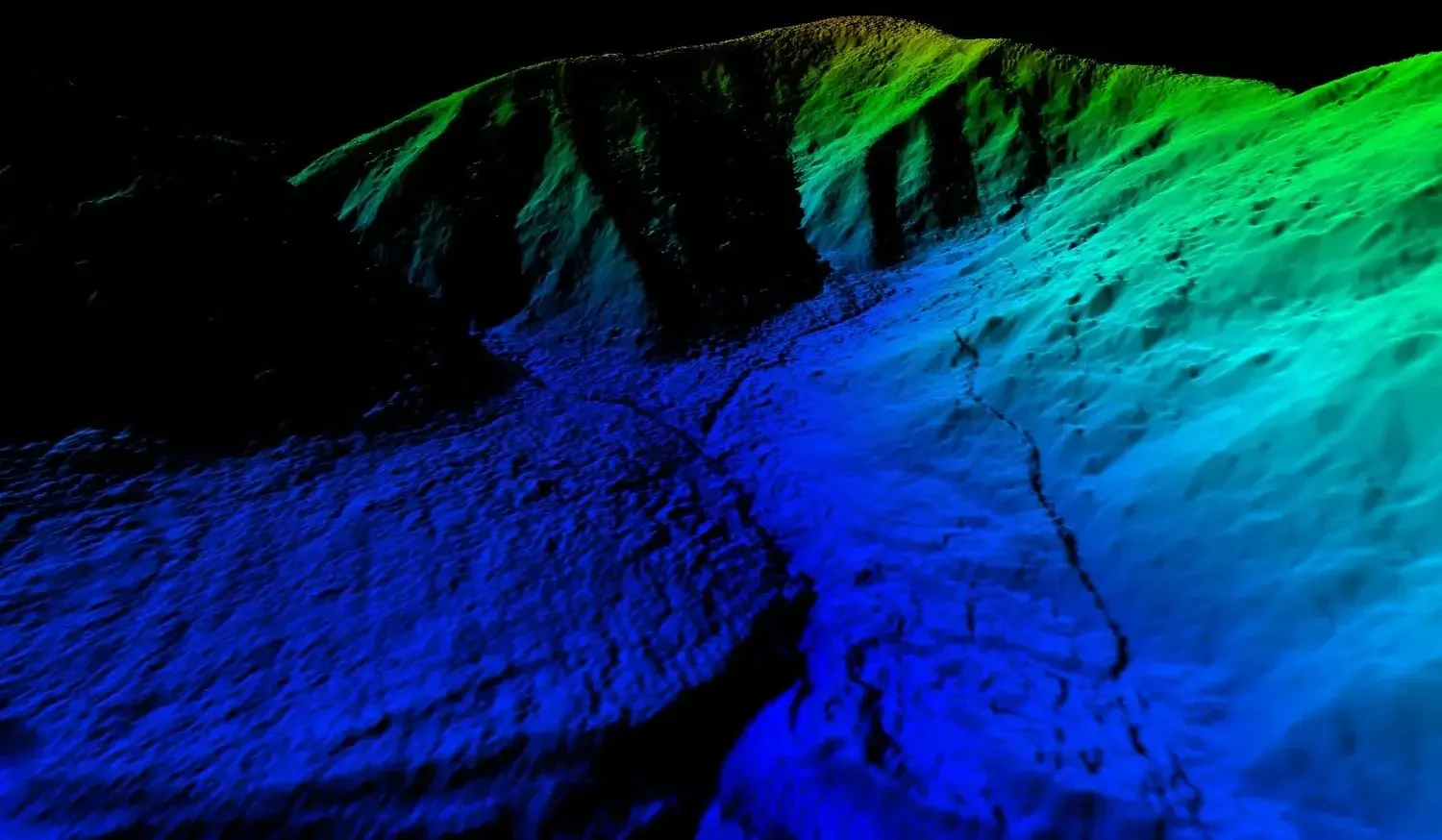
Drone-mounted LiDAR is a remote sensing technology that uses laser light pulses to measure distances and create high-resolution 3D maps of objects and environments. LiDAR systems emit infrared light pulses towards a target and measure the time they take to bounce back, creating precise distance measurements from multiple layers.
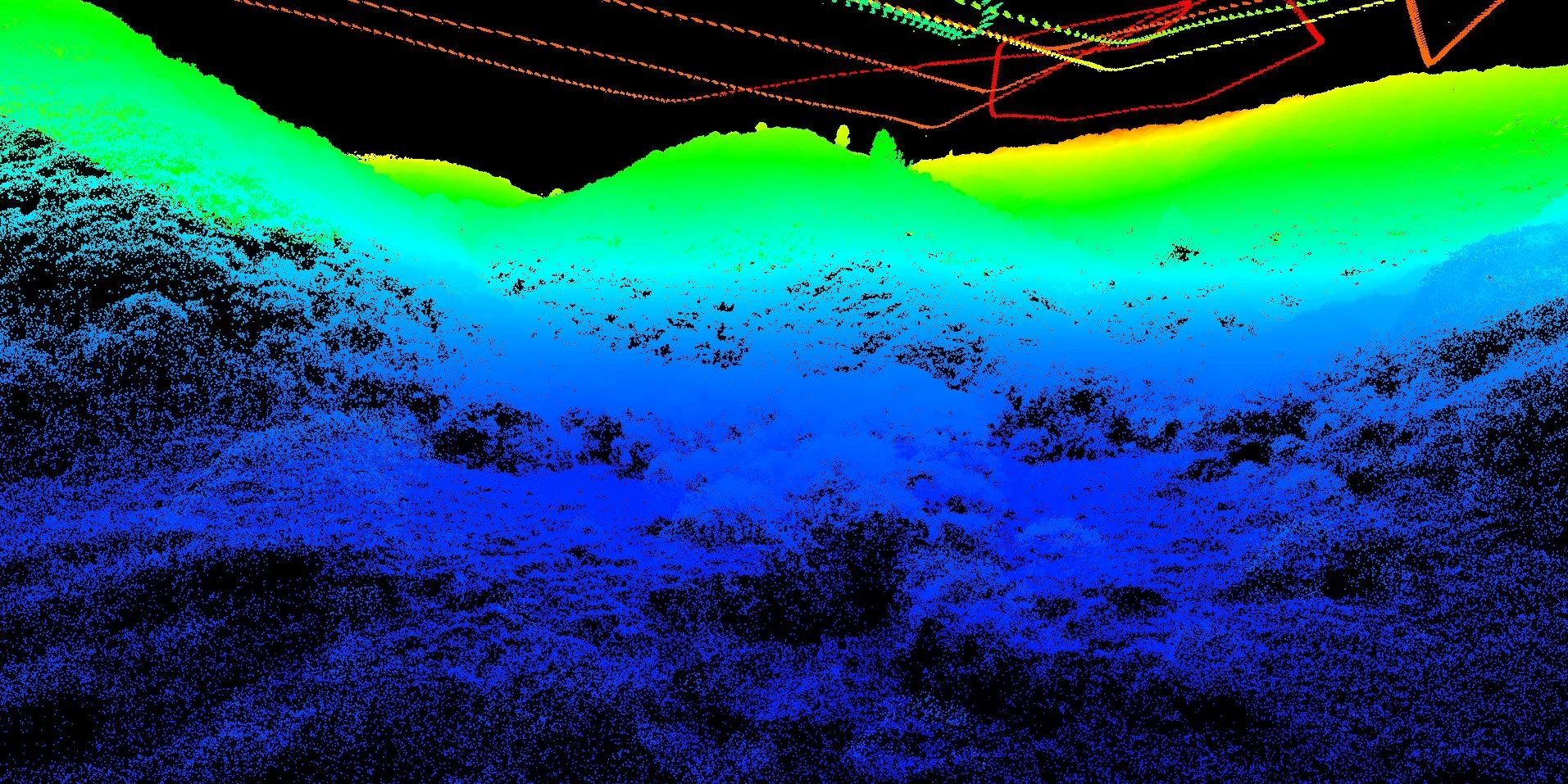
Recon’s drone LiDAR systems capture up to five returns per pulse. This means we can extract the surface layer using ‘first’ and ‘only’ return pulses, and extract the ground beneath vegetation and other obstructions typically using ‘only’ and ‘last’ returns. This capability makes UAV LiDAR mapping especially valuable across New Zealand's heavily vegetated and complex terrain.
For ground-based applications, explore our 3D laser scanning services.
We capture LiDAR by drone only. For very large areas we combine helicopter aerial photography with targeted drone LiDAR. Compare the methods on our aerial mapping services page.
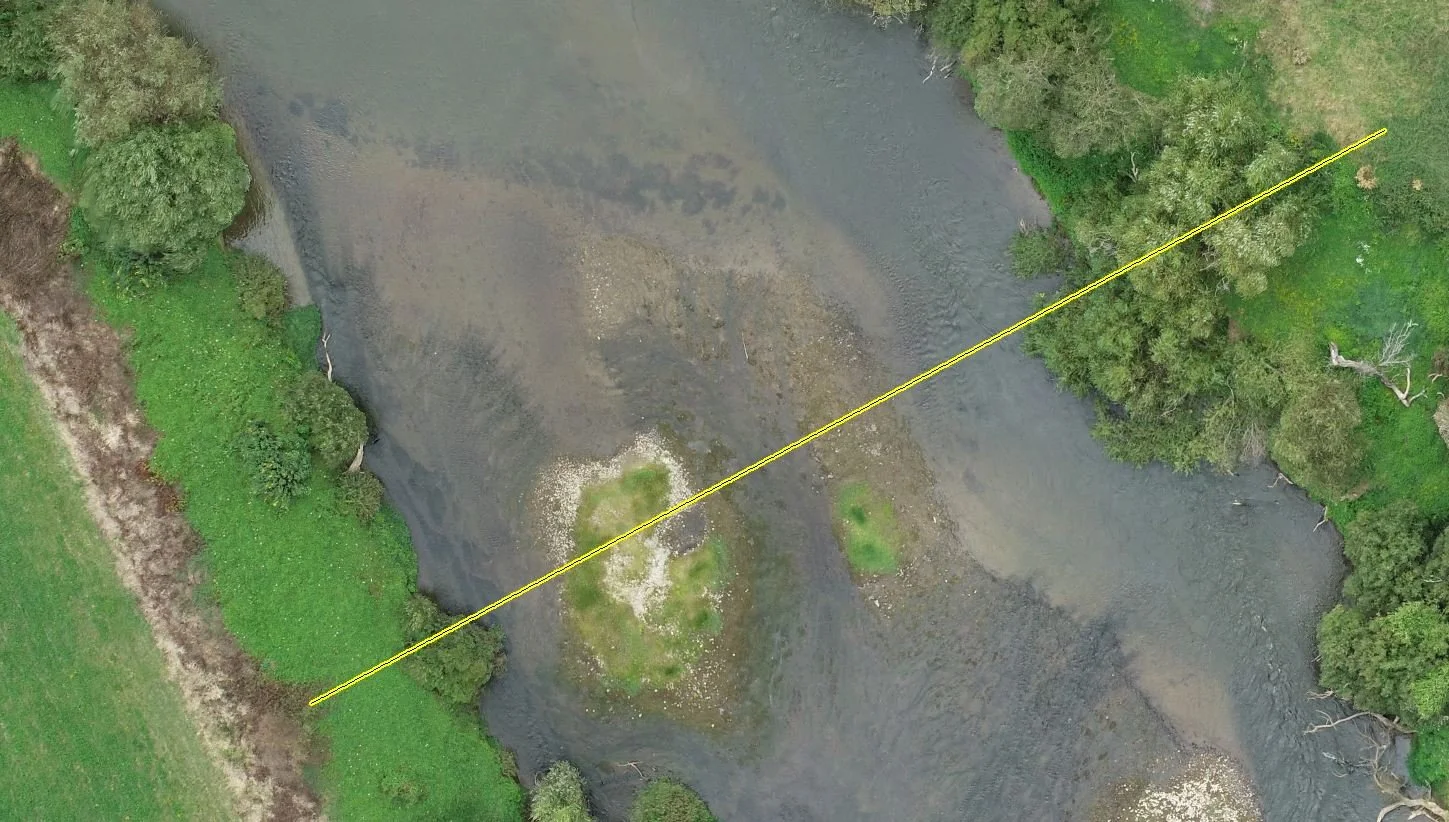
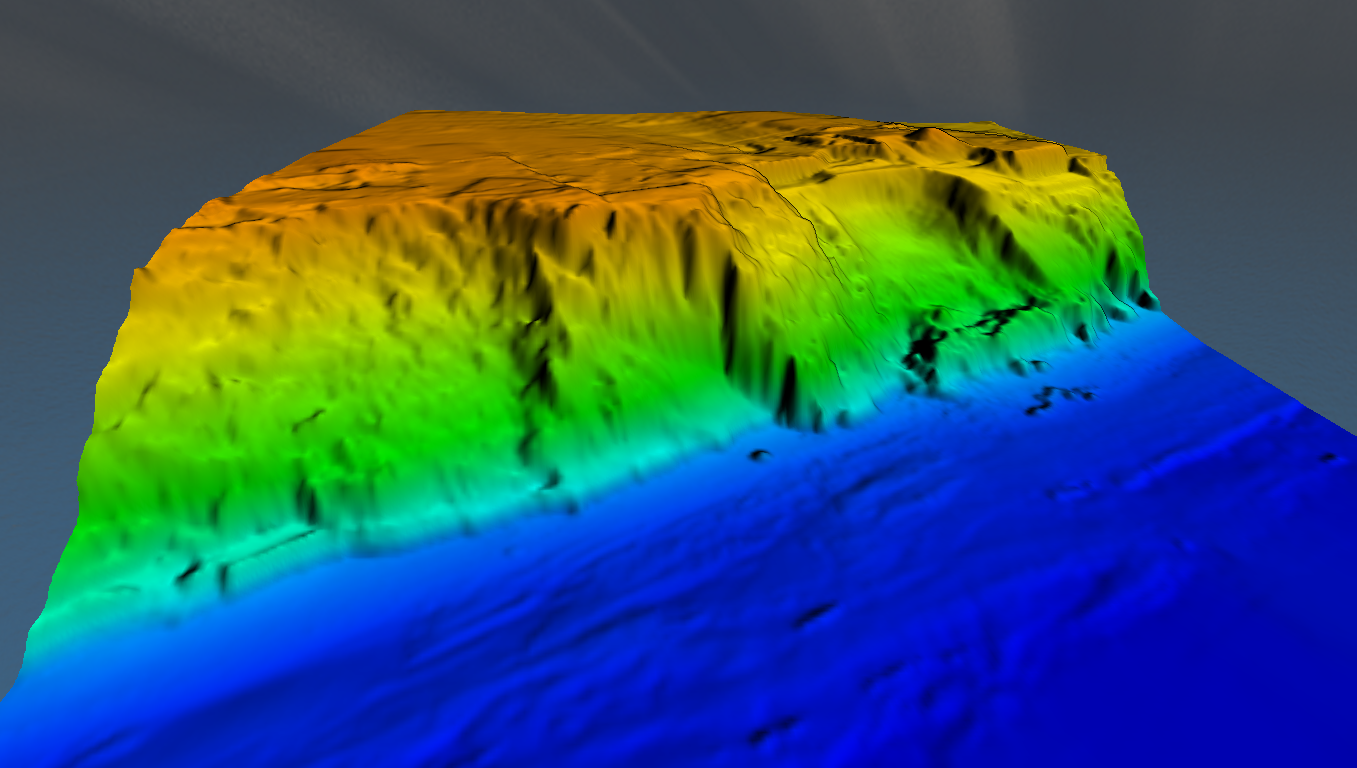
Why Use Drone LiDAR?
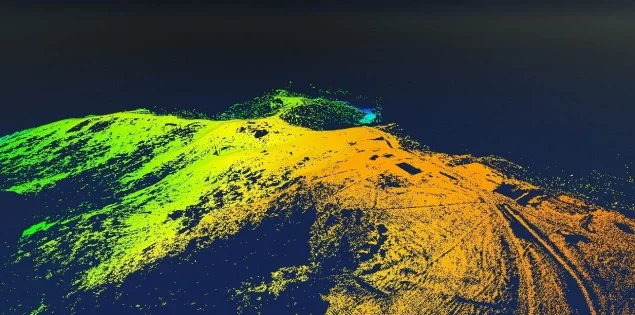
LiDAR drone technology has revolutionised aerial mapping and surveying, especially when combined with the capabilities of unmanned aerial vehicles (UAVs). Unlike photogrammetry, LiDAR uses active laser pulses rather than passive light, meaning it performs consistently regardless of lighting conditions and can penetrate through vegetation canopy to map the ground beneath.
LiDAR surveying services offer a powerful solution for gathering high-resolution data over large areas in a short amount of time. Recon's UAV LiDAR systems can capture 500–1,000 hectares per day, making them among the fastest and most cost-effective survey methods available across New Zealand's diverse terrain.
Our LiDAR Expertise & Certifications
Working with Recon means partnering with highly experienced specialists who are passionate about delivering accurate, high-quality data on every aerial LiDAR surveying project. Our Part 102-qualified UAV operators have proven experience operating across New Zealand’s challenging terrain, led by Jeremy, who has over 20 years of LiDAR expertise.
We pride ourselves on the quality of the data we capture and on how our team transforms it into scans and precise 3D models that deliver real value to our clients. The Recon team has completed over 900 UAV jobs, with data delivery within two weeks of capture, depending on project size.
As industry professionals, we hold a current SiteWise Gold certification, ensuring our team, clients, and worksites are always safe. Our aerial LiDAR mapping services in NZ are also fully insured, and our workflow includes rigorous ground-control validation and RMSE reporting for every project.
The team’s capabilities are often combined with drone LiDAR surveys, including urban aerial photography and orthophotos, 3D reality modelling for townships and cities, high-resolution building and asset inspection, and high-quality 3D scanning, CAD and Revit modelling. We regularly deliver specialist UAV and LiDAR solutions for councils, utilities (including Watercare), network operators and government agencies across a diverse range of infrastructure and environmental projects.
Based in Auckland, we primarily serve Auckland and surrounding regions; however, our work extends nationwide and occasionally takes us internationally.
Our Drone LiDAR Workflow
1. Talk to an Expert
First and foremost, we discuss your project goals. We establish what the data will be used for, the potential challenges with capturing the data, the site conditions, and any hazards or restrictions. It’s then critical to understand how the LiDAR data, including all of the derived outputs, will be used.
Example questions we may ask:
- What software will you or your consultants import it into?
- Do you have a better experience working with point clouds, TIN surfaces, or 3D CAD drawings?
- What are some of the likely software and hardware limitations?
2. Project Planning
We define scope, methodology, compliance, and timelines while reviewing the long-range forecast to predict suitable flying days for our UAV LiDAR services. Requirements, such as landowner permissions or notifications, are relayed to you.
3. Site Preparation
Permissions, safety planning, and equipment setup are completed. A JSEA, or Job Safety and Environmental Analysis, is prepared to record known and potential site hazards, along with steps to remove or reduce risks to an acceptable level. Aerodrome maps are reviewed, and where entry into controlled airspace or other restricted areas is required, applications are prepared and communicated to the relevant parties.
When required, our team will lodge NOTAMs (Notice to Airmen) or liaise directly with Airways in special circumstances.
4. UAV LiDAR Data Capture
Data is collected by our NZ CAA Part 102–qualified operators during our high-accuracy drone LiDAR mapping services. Flights are planned using optimal parameters to ensure an effective balance between flight efficiency and data accuracy or image resolution.
Perimeter flights ensure there are no data gaps at the end of flight paths, while maximising data capture over abutting roads and the neighbouring topography. This is often critical for detailed design and planning.
5. Data Processing & QA
Raw data is processed, validated, and quality-checked against surveyed ground control. Recon runs all raw data through specific processing algorithms, including strip alignment, to improve accuracy and reduce point cloud noise and outliers.
If the data is deemed fit for purpose, a table of deltas (comparison to ground control) and RMSE is calculated. If the data does not meet accepted quality or accuracy, additional processing or a re-fly is performed.
6. Delivery & Support
Final datasets are delivered in the required file formats with ongoing support provided. Data is typically delivered via cloud-based file transfer or, when required, via a portable storage device.
What Are The Main Benefits of LiDAR Scanning Services?
Rapid Data Acquisition
UAV LiDAR mapping enables efficient collection of large-scale data over expansive areas, saving significant time and resources compared to traditional field surveying methods.
High Accuracy
Aerial LiDAR mapping services in NZ can achieve survey-standard accuracy, typically +/– 20mm–30mm. Recon utilises a base station on most projects, keeping RTK distances under 2km to maximise both height and positional accuracy.
Non-Contact & Safe
LiDAR does not require physical contact with the environment, making it ideal for hazardous, sensitive, or inaccessible areas.
Vegetation Penetration & Ground Modelling
Unlike optical methods, LiDAR pulses penetrate through tree canopy and undergrowth to map the ground surface beneath. This makes it the preferred method for mapping ground under vegetation across forestry, conservation, and land development projects throughout New Zealand.
What Deliverables Will You Receive?
Recon delivers all data in formats tailored to your software and workflow requirements. We work with you and your consultants ahead of delivery to confirm classifications, file sizes, coordinate systems, and attribute values so data integrates seamlessly into your existing tools and workflows.
-
LiDAR surveying services result in high-density, colourised point clouds accurate to up to +/– 50mm. The point cloud is the foundational dataset from which all other deliverables are derived.
Delivered in industry-standard .LAS or .LAZ format, it contains millions of individually measured points, each with XYZ coordinates, intensity values, return information, and RGB colour from the integrated camera. Point clouds can be viewed and manipulated in a wide range of desktop and cloud-based software platforms.
-
LiDAR points classified as ground are used to generate the digital terrain model, also known as 'bare-earth'. Ground classification is performed using specialised filtering algorithms that separate ground returns from vegetation, structures, and other above-ground features.
This classified subset is a critical deliverable for clients who need to understand the true ground surface, particularly in areas of dense vegetation where optical methods cannot penetrate the canopy. The ground-classified point cloud can be delivered as a standalone dataset for clients working directly in point cloud environments.
-
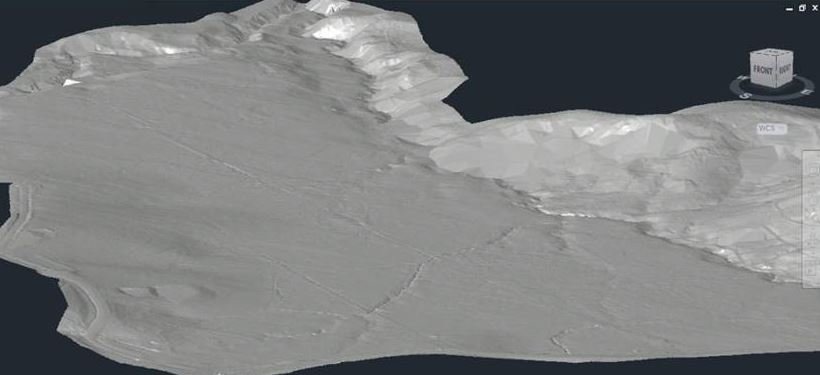
A TIN or surface derived from the LiDAR classified ground points. The DTM (sometimes called a bare-earth model) represents the ground surface stripped of all above-ground features, including buildings, vehicles, and vegetation. It is one of the most widely used LiDAR drone outputs across land development, civil engineering, flood modelling, and environmental assessment.
DTMs can be delivered as raster grids (GeoTIFF), TIN surfaces, or as contour data at intervals such as 0.5m or 1m, depending on client requirements and terrain complexity.
-
A TIN or surface created from all or a selection of LiDAR points, for example, a surface representing a vegetation canopy. Unlike the DTM, the DSM captures the uppermost surface of everything the LiDAR pulses encounter, including tree canopy, building rooftops, and structures. It is particularly useful for canopy height modelling in forestry, line-of-sight analysis, solar potential assessments, and telecommunication planning.
The difference between the DSM and DTM can also be used to generate a Canopy Height Model (CHM), showing the height of vegetation above the ground surface.
For clients requiring fully rendered outputs, see our 3D modelling services.
-
The LiDAR point cloud can be classified into classes such as power poles, conductors, buildings, high and low vegetation, allowing easier manipulation and analysis. Feature classification transforms a raw point cloud into an organised, actionable dataset. Isolated classes can be toggled on or off, exported independently, or used to drive automated analysis workflows.
For infrastructure clients, classified powerline corridors enable vegetation encroachment modelling and clearance analysis. For built-environment projects, classified building points support accurate rooftop modelling, volumetric calculations, and BIM integration.
Classification is performed to ASPRS standards and can be customised to suit project-specific requirements.
-
2D and 3D datasets captured from the LiDAR point cloud, such as breaklines, vegetation driplines, and building outlines, can be further utilised in 2D or 3D software, including GIS. These vector datasets bridge the gap between raw point cloud data and the 2D and 3D design environments that engineers, planners, and GIS analysts work in daily.
Breaklines improve the accuracy of TIN surfaces by enforcing correct terrain behaviour along ridges, streams, and embankments. Vegetation driplines and building outlines support resource consent, planning, and cadastral workflows.
Deliverables can be formatted for direct import into AutoCAD, Civil 3D, ArcGIS, QGIS, Revit, and other platforms, ensuring the data works within your existing software environment from day one.
Industries We Work With
Aerial LiDAR surveying is versatile and caters to a wide range of industries. Below are some of the sectors Recon regularly serves across New Zealand:
-
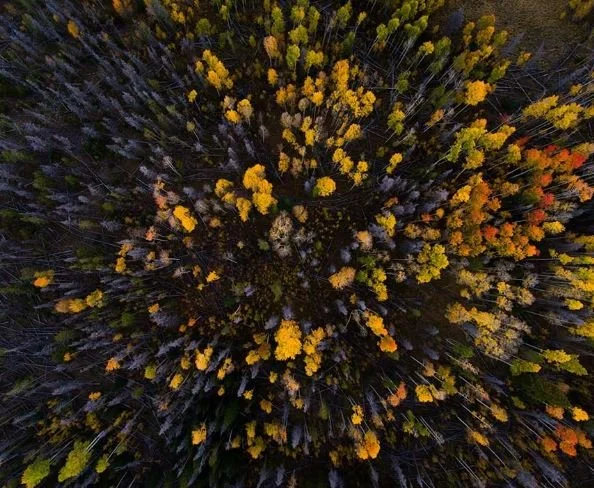
Agriculture & Forestry
Drone LiDAR enables precision agriculture, timber volume estimation and sustainable forestry planning, mapping the ground and tree heights beneath the canopy.
High resolution RGB orthophotography for asset management and harvest planning
DTM for harvest road and haul planning
Biomass calculation
Repeat surveys for monitoring vegetation growth
-
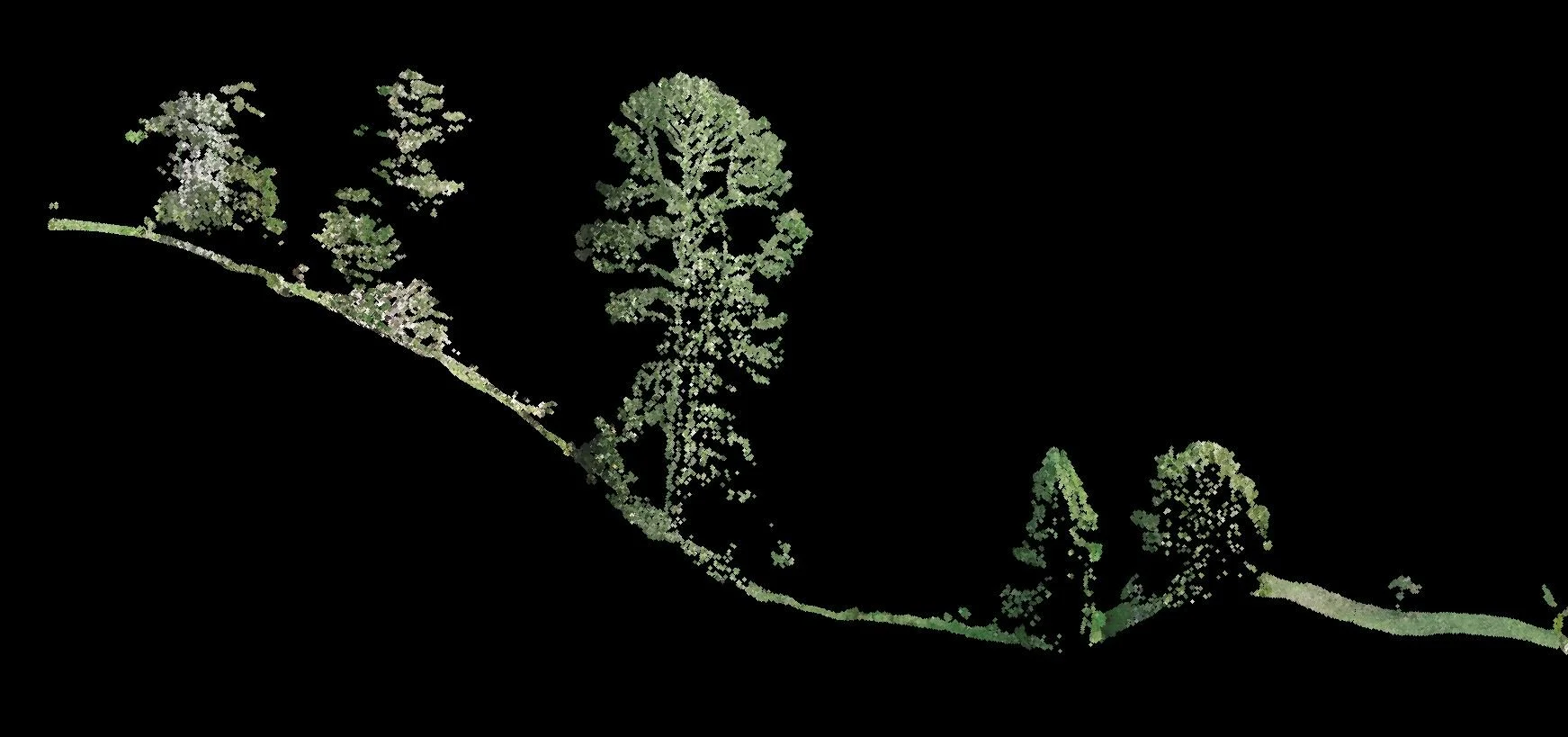
Environmental
Mapping ecosystems, wetlands and coastal zones to monitor vegetation, erosion and habitat changes. Drone LiDAR provides detailed 3D data for conservation, impact assessments and environmental planning.
Project-specific flights covering complex landscapes
Model underlying geomorphology
Pointcloud or surface layers provided in CAD or GIS formats
Unobtrusive data gathering for sensitive projects
River-edge and stream-edge mapping
Coastal mapping, erosion monitoring, cliff-face mapping
Flood modelling
Tsunami modelling
-

Land Development
Accurate topographic surveys, capturing detailed terrain models for subdivision planning and site design. LiDAR enables precise monitoring of bulk earthworks, helping developers track progress, manage cut-and-fill, and reduce errors and rework.
Ground contours or DTM
Engineering design with accurate data
3D visualisation
Hydro modelling
Start the project with the best data from the outset
-
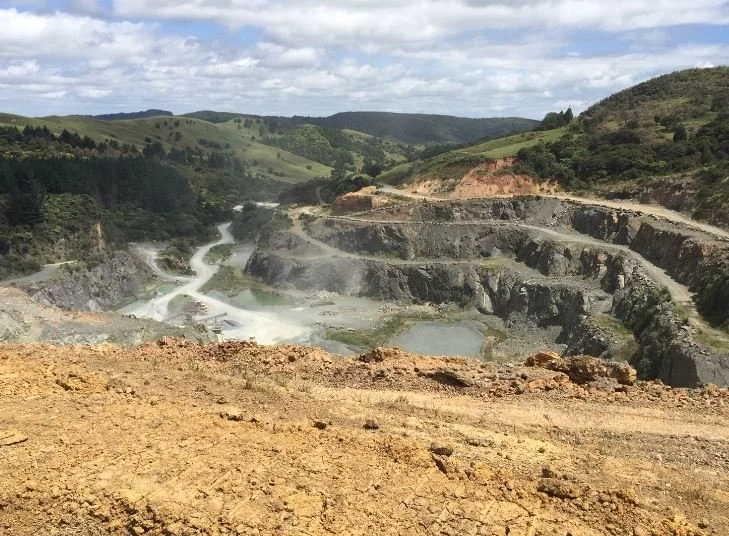
Mining
Monitoring quarries, open-pit mines and stockpiles with precise volumetric and topographic surveys. Drone LiDAR supports resource management, safety planning and compliance reporting.
DTM or contours for mine exploration and design
Establish an accurate model over often tricky terrain
Rapid turn-around of data
Safer and faster than ground surveying
More cost-effective than field survey and more accurate than photogrammetry
-
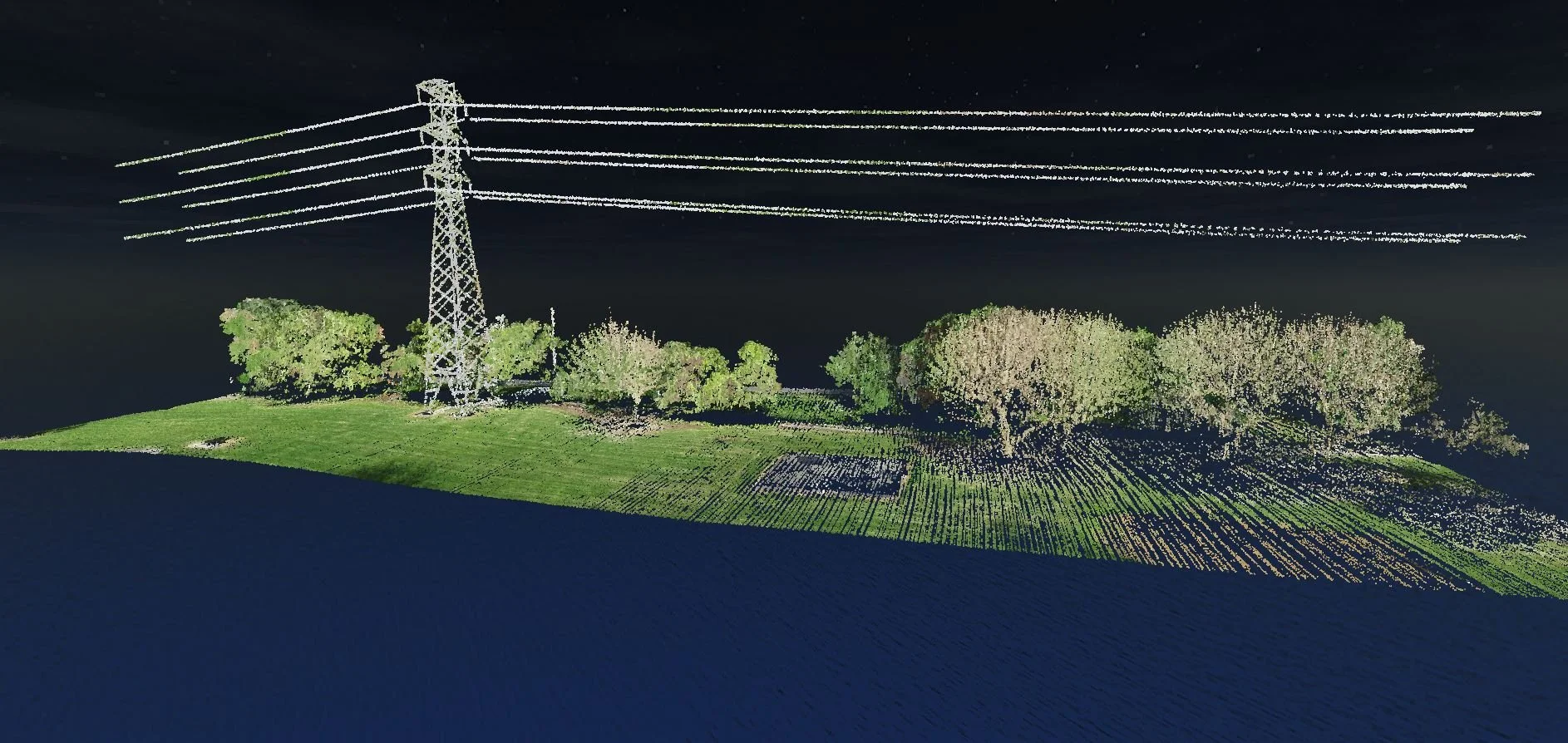
Power and Utilities
Detailed transmission corridor mapping, capturing accurate terrain and structure data across long distances quickly and safely. LiDAR also supports vegetation clearance modelling by identifying encroachment risks and measuring canopy proximity to powerlines.
Power conductor, assets and pipeline aerial survey via drone LiDAR
Accompanying high resolution aerial imagery
Hydro or large-plant asset management
Ground, vegetation and pole height data for thermal upgrade/re-tensioning design
Mapping vegetation, modelling growth through repeat surveys
As-built surveys
-
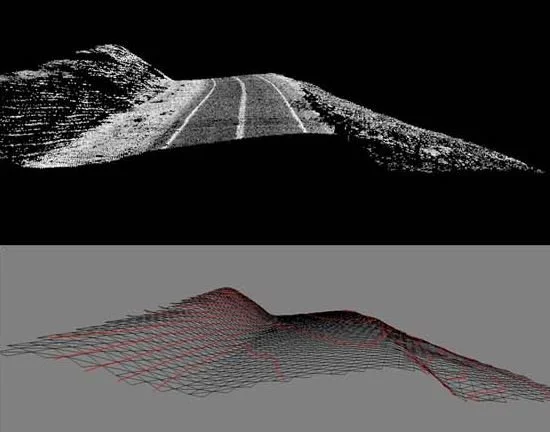
Transport
Surveying rail corridors, highways and bridges with high-resolution LiDAR to support design, maintenance and safety assessments, capturing terrain, structures and surrounding environments.
Aids new route design for road and rail
Captures a DTM of a wider corridor, enabling a more comprehensive design
Supplements ground survey and accurate enough for detailed design
Captures buildings and structures critical for initial planning
Ideal for planning forestry access tracks
Mapping roadside slips and monitoring change
Case Studies
“Recon did a great job diving into the project and delivering the LiDAR and aerial imagery within a very compressed timeframe. Their flexibility and willingness to get the job done amongst challenging circumstances were standout attributes so far as the investigation team were concerned. The information provided by Recon was of a high quality and was used seamlessly by the designers that followed.”
- Mark Child, Tonkin and Taylor’s
-
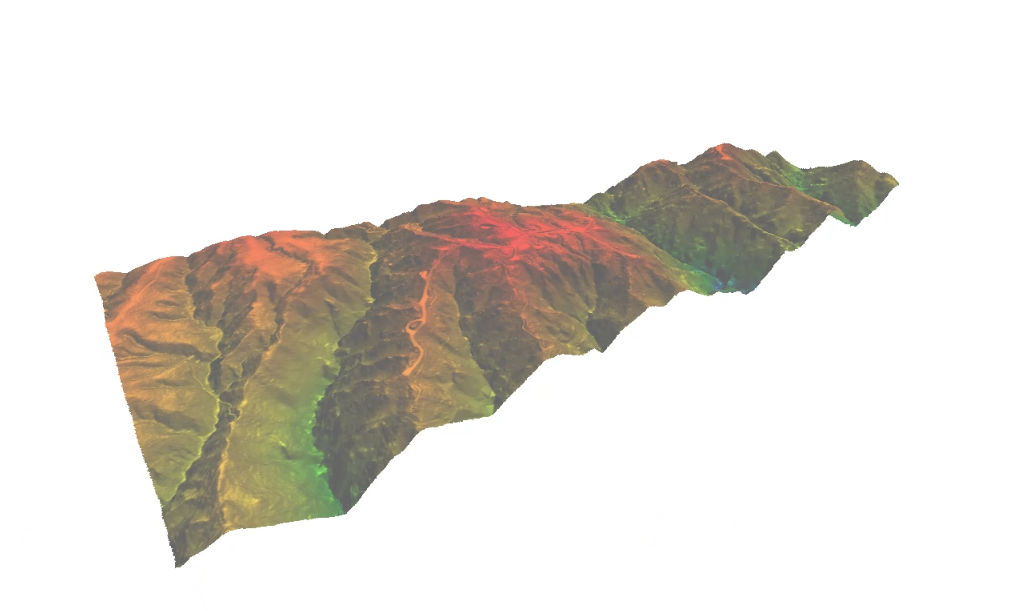
DRONE LIDAR SURVEY AIDS TE RERE HAU WINDFARM UPGRADE, NORTH ISLAND
Drone LiDAR supported the Te Rere Hau Wind Farm upgrade by providing high-resolution topographic data where existing information was too coarse for design and consenting. Accurate terrain and haul road mapping enabled assessment of road upgrades for transporting 162-metre turbines while reducing uncertainty around earthworks and environmental impacts.
Measurable Outcomes:
Captured high-accuracy LiDAR and aerial imagery to replace low-resolution survey data.
Surveyed the haul road corridor to support turbine transport planning.
Supported fast-track consenting with accurate terrain, earthworks and ecology data.
Delivered survey-grade data in under two weeks from capture.
-
UAV LIDAR MAPPING FOR KIWIRAIL
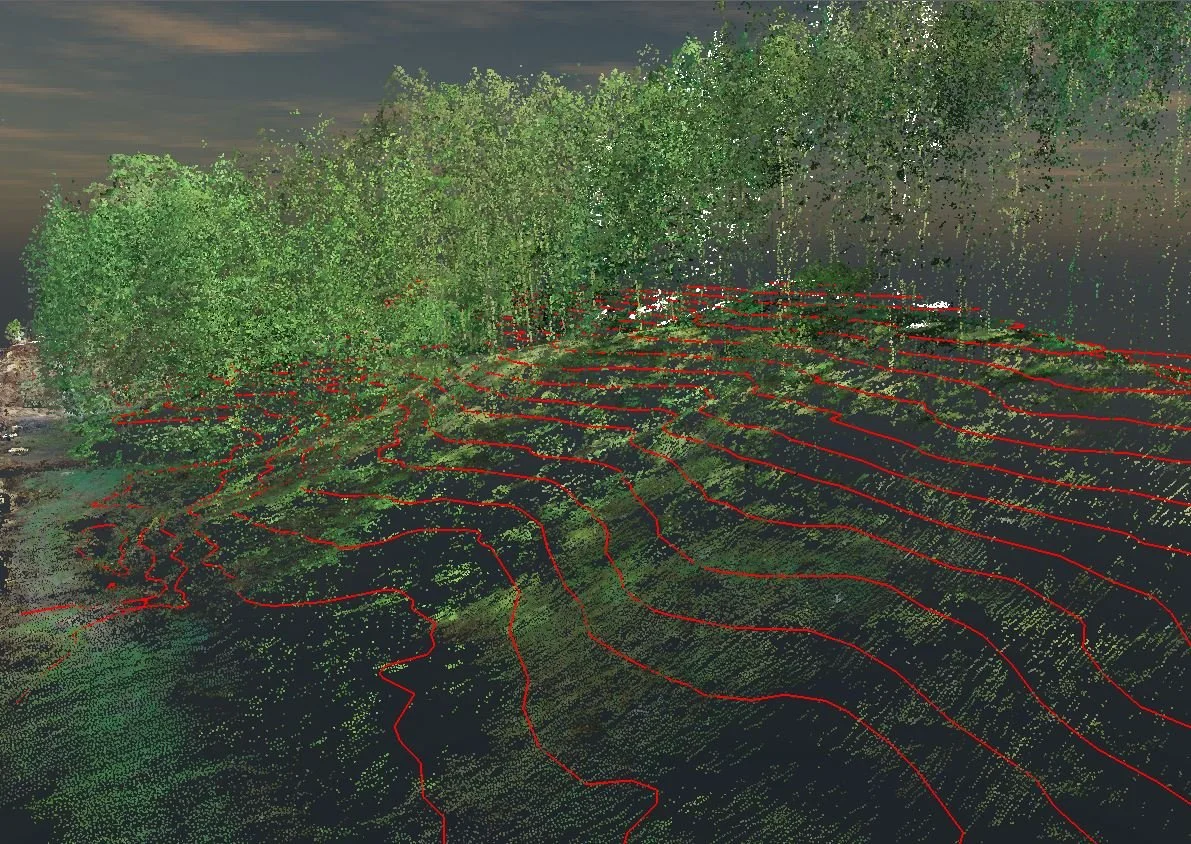
Recon’s UAV LiDAR mapping supported KiwiRail’s Northland Rail Upgrade by surveying all 13 tunnels along the Swanson to Whangarei corridor, delivering high-density terrain data in heavily vegetated and challenging terrain. The survey was completed within tight pre- and post-lockdown timeframes, capturing accurate topography around tunnel portals and above alignments.
Measurable Outcomes:
Captured LiDAR and aerial imagery across all 13 rail tunnels.
Delivered high-accuracy survey data within a compressed timeframe.
Mapped remote, vegetation-covered terrain with survey-grade accuracy.
Enabled rail lowering design for increased container clearance.
Integrated seamlessly with existing survey data.
Request a Drone LiDAR Quote
Ready to get started? Talk to a Recon LiDAR specialist today. We provide drone LiDAR surveying services across Auckland and throughout New Zealand, with fast turnaround and survey-grade accuracy.
FAQ’s
-
LiDAR can capture highly accurate measurements of the terrain, objects and features. Drone LiDAR surveys result in high-density point clouds accurate to +/- 20mm – 30mm in ideal conditions.
Recon utilises a base station for most projects, keeping RTK distances—between the rover (in this case, the UAV) and the source of its positioning improvement (the base station)—under 2km, improving height and positional accuracy. Raw data is then processed through strip alignment and other algorithms to further improve accuracy and reduce noise and outliers.
-
LiDAR can be used in a variety of settings and environments, including urban areas, forests, cliffs or slips, or defining areas surrounding water bodies. With the accuracy and resolution now achievable, Recon is commonly asked to model detailed structures and rooftop equipment from the point cloud.
Our high-accuracy drone LiDAR mapping services are ideal for monitoring surveys, where engineering requirements often demand +/- 30mm or better.
-
Yes. LiDAR can cover large areas quickly and efficiently, and typically saves money compared to traditional field surveys, particularly for larger sites. For small to medium areas of 1,000 to 2,000 hectares, UAV LiDAR is often more economical than manned-helicopter or fixed-wing alternatives.
Our team can typically capture up to 500 – 1,000 hectares per day.
-
Yes. This is one of the most significant advantages of LiDAR over optical methods. LiDAR pulses penetrate tree canopy and undergrowth to capture the ground surface below, enabling detailed 3D maps even across densely vegetated terrain.
This capability is why UAV LiDAR surveying in New Zealand is the preferred method for mapping ground beneath vegetation across our landscape.
-
LiDAR can be integrated with GPS and machine learning algorithms to automate analysis, saving time and reducing the risk of human error.
Recon ensures that point cloud resolution, accuracy, file sizes, and classifications align with your requirements. For example, if you only need the classified 'Ground' points, building roof data, or a full multi-return dataset, we will tailor the output to suit.
-
LiDAR is a non-invasive technology that does not require physical contact with the environment, making it a safe tool for use in hazardous or sensitive areas.
Our team are NZ CAA Part 102-certified, which is a New Zealand Civil Aviation Authority safety regulation for unmanned aircraft operators who wish to fly outside the standard Part 101 rules. It allows for advanced operations, including flying at night, over private property via notification, near controlled airfields, over state highways, and other higher-risk environments.
-
Yes. As LiDAR uses its own laser pulses, it doesn’t need sunlight to operate. The main limitation is that integrated camera imagery cannot be captured in darkness, so orthomosaic outputs would not be available for night operations.